Drug-Free
Communities (DFC)

The Drug-Free Communities (DFC) Program is a federal grant initiative that supports local coalitions in preventing youth substance use. Through this funding, Raleigh County United for Prevention leads collaborative, data-driven efforts focused primarily on tobacco, vaping, and alcohol prevention in our community.

Federal Support for Prevention

What is the Drug-Free Communities (DFC) Program?

The Drug-Free Communities (DFC) Program is a federal grant initiative funded by the White House Office of National Drug Control Policy (ONDCP) and administered by the Centers for Disease Control and Prevention (CDC). It supports local coalitions, such as Raleigh County UP. It assists community prevention groups, schools, and law enforcement partnerships and impacted community sectors in preventing and reducing youth substance use.

Why Federal Grant Support Matters

The Drug-Free Communities Support Program is designed to strengthen evenly-based prevention work using community networks rather than isolated projects. Federal support like this helps local coalitions:

  • build long-term, community-driven strategies
  • use reliable local data to guide decisions
  • implement prevention that is evidence-based and measurable
  • encourage regional coordination rather than duplicating services


This structured federal approach is backed by decades of prevention science and is intended to create sustainable community change rather than short-term efforts.

Strengthening Community Collaboration

The Goal of the DFC Program

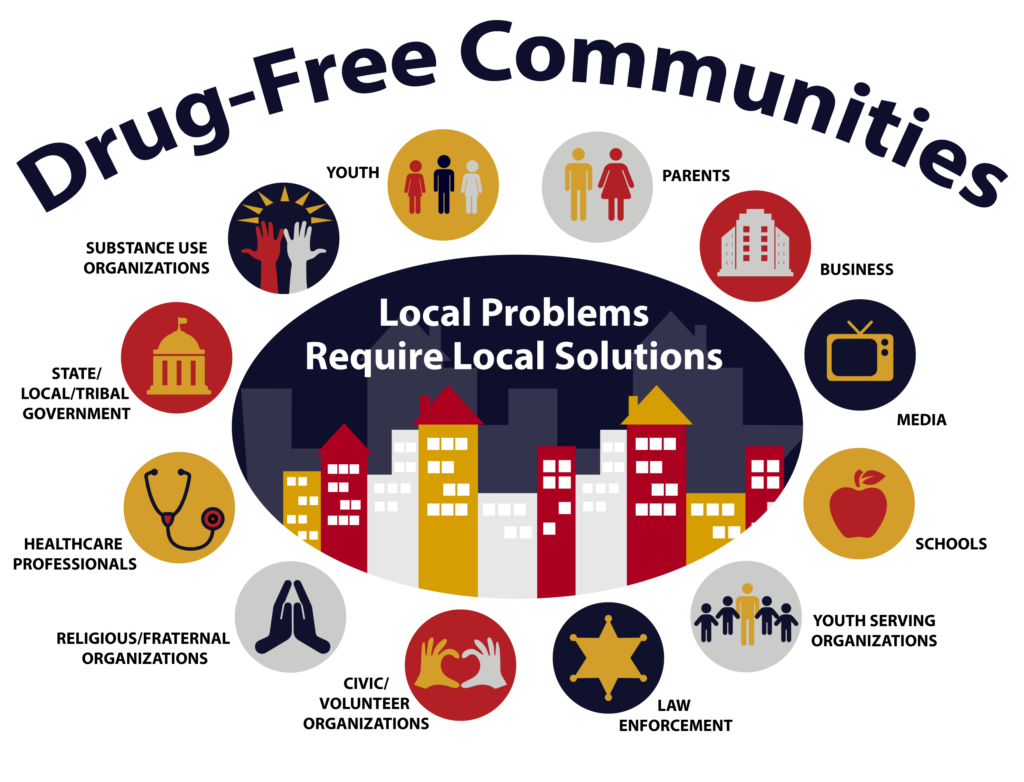
The goal of the DFC Program is to establish and strengthen community collaboration to prevent and reduce youth alcohol, tobacco, and drug use. It encourages communities to address local substance use challenges through data-driven strategies, education, and policy change. By empowering local leaders and promoting community engagement, the DFC program aims to create lasting, sustainable reductions in youth substance use and foster healthier, drug-free environments for young people.
Strategic Prevention Training

National Coalition Academy

In 2023, we completed the National Coalition Academy. This is a training program developed by the CADCA (Community Anti-Drug Coalitions of America) that equips community coalition leaders with the knowledge and skills to build and sustain effective substance misuse prevention coalitions. It focuses on strategic planning, data-driven approaches, and community collaboration to create lasting, positive change in reducing drug use and promoting public health.

Our Local Focus

Through the National Coalition Academy, Raleigh County United for Prevention used local data to drive an action plan with the primary focus of tobacco/vaping and alcohol.

ALCOHOL USE

0 %

of youth reported past 30-day alcohol use.

18% perceive alcohol use as a great risk.

Tobacco Use

0 %

of youth reported past 30-day tobacco use.

21% perceive tobacco use as a great risk.

Marijuana Use

0 %

of youth reported past 30-day marijuana use.

26% perceive marijuana use as a great risk.

Prescription Drug Misuse

0 %

of youth reported past 30-day prescription drug use.

32% perceive misuse as a great risk.

Data reflects the most recent available county-level youth survey results.

This site is supported by the Office of National Drug Control Policy (ONDCP) and the Centers for Disease Control and Prevention (CDC) of the U.S. Department of Health and Human Services (HHS) as part of a financial assistance award funded by ONDCP. The contents are those of the author(s) and do not necessarily represent the official views of, nor an endorsement, by ONDCP, CDC/HHS, or the U.S. Government.